
Advocates Against SC Heartbeat Bill Have Support From Unlikely Sources
- Robert Perrell

- Nov 17, 2019
- 3 min read
Updated: Jan 27, 2020
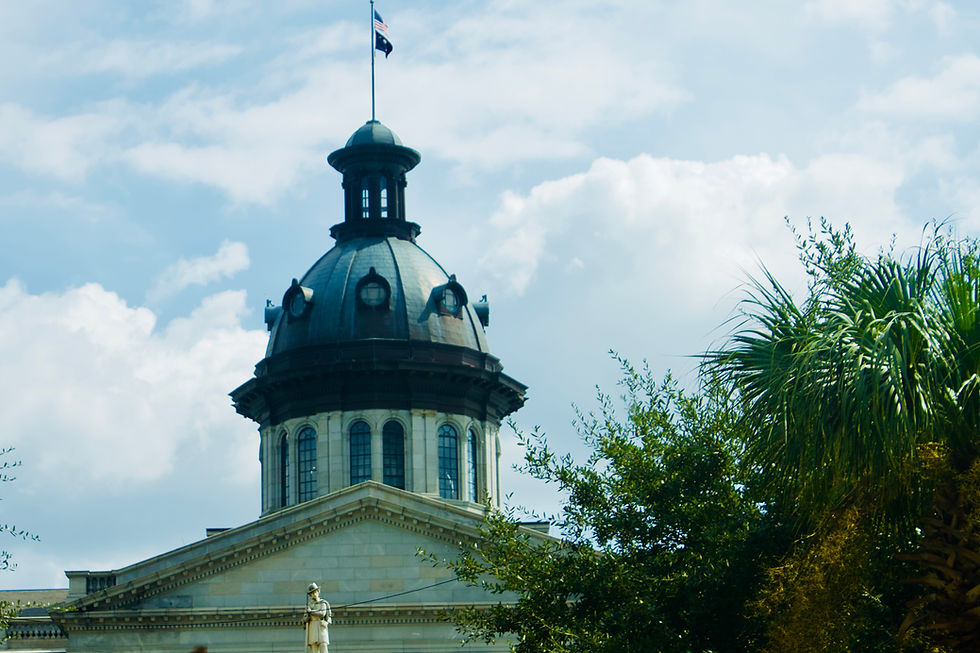
Last week, the Fetal Heartbeat Protection from Abortion Act took a giant step forward in its journey through state government when the Senate Medical Affairs Committee voted to approve the bill, clearing the way for a Senate vote in 2020. But as advocates against the “Heartbeat Bill” gear up for the fight next year, support from members of the religious community is growing and could have a huge impact on the debate.
This is still a diversion from the general consensus of most evangelical communities, but a few brave individuals have decided to take a stand on the matter of women’s rights and governmental overreach. What is even more fascinating is that this support is coming from religious leaders in the community, not just individual parishioners. These leaders, such as Merianna Neely, have been public with their support and have presented their opinions in open forums.
“I submitted a written testimony in the recent Congressional Hearings here in Columbia against the heartbeat bill and in support of women’s right to choose,” said Neely, who is the pastor at Garden of Grace United Church of Christ in Columbia.
Neely is not alone, other protestant leaders such as Patricia Malanuk, who is a Reverend Cannon at the Trinity Episcopal Cathedral in Columbia, also took part in the debate. Malanuk opted to speak directly during the hearings in September, arguing that the heartbeat bill was an example of governmental overreach.

“Many religious people who oppose the use of abortion as a means of birth control, family planning, gender selection or as the Episcopal church, my church, says, for reason of mere convenience, but a great many people of faith at the same time are deeply opposed to the legislation of healthcare decisions,” said Malanuk in her testimony.
Malanuk went on to say in her testimony that the since 1967, the Episcopal church is “unequivocally” opposed to legislation on the part of the state which would deny the right of the individual to reach an informed decision on the termination of a pregnancy. Even though Malanuk’s argument centered around the idea of government intrusion into individual autonomy, she makes it clear that a woman’s right to choose should not be infringed upon.
This echoes the sentiment shared by Neely as well, who believes that a woman’s reproductive decisions are an extremely important, personal decision.
“My argument has nothing to do with the decision that a woman makes, but more to the fact that women should be empowered with information, education and, in my opinion, spiritual guidance when making such a difficult choice,” said Neely.
These champions of women’s reproductive rights are extremely welcome in the fight against making abortion illegal, but these allies are not in the majority in religious communities. According to a 2014 pew research religious landscape study, 63% of evangelical protestants believe abortion should be illegal in all or most cases, which trails only Jehovah’s Witnesses (75%) and Mormons (70%). This is compared to only 23% of the religious “nones,” framing the question of abortion with a highly religious context.

That is what makes religious leaders like Neely and Malanuk so important when combating legislation like the Heartbeat Bill. They can help shift the Overton window closer to an area where people can finally begin to have productive conversations about abortion. And as these barriers are removed, it is easy to see religious and non-religious communities in the future working together to make a better society for everyone.
“As an ordained person, one of my roles is to be present in the suffering of people from all walks of life. And I have come to know, for myself, that it is a foolish thing for me to try to answer questions for any other person unless I have had the ability to walk in that person’s shoes,” said Malanuk in a powerful statement of solidarity.
If you want to help in the fight against the SC Heartbeat Bill visit the NAPRAL Pro Choice Foundation here. And for more news and information on the secular community please follow @SecularShepherd.



Comments